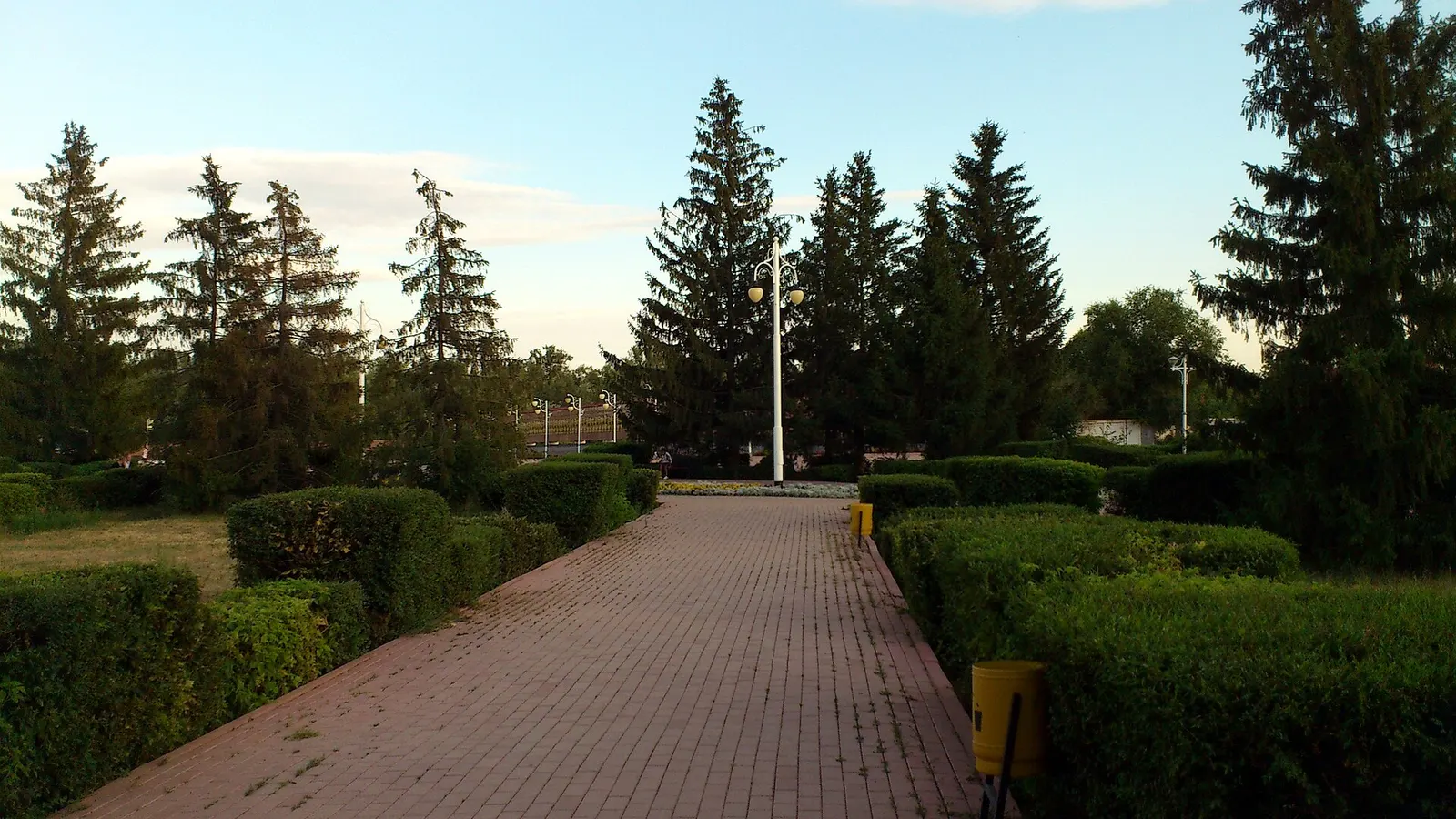
 Photo: Wikimedia Commons
A city on the border of Europe and Asia: where Pugachev's uprising began, Pushkin came to visit and the great Tatar poet Tukay found his voice
An old Cossack town on the Ural and Chagan rivers: merchant mansions, Pushkin and Pugachev in local history, quiet riverside walks. Every Fargo route starts here.
History of Uralsk
A bridge between Europe and Asia
The Ural River divides two parts of the world, and Uralsk has stood at this crossroads for four centuries: a Cossack fortress, a gateway to the steppe, a road from East to West. People who shaped Russian history came here.
- 1613 — Yaitsky GorodokCossacks founded a fortress on the Yaik River. The town lived on fish, trade and service at the edge of the empire.
- 1773 — Pugachev's uprising beginsThe rebellion that shook the empire began in Yaitsky Gorodok. Here Pugachev married a Cossack woman, Ustinya Kuznetsova — the house he visited is now a museum.
- 1774 — SuvorovGeneral Alexander Suvorov came for Pugachev after his own comrades handed him over. From here the prisoner was taken to Simbirsk and on to Moscow. After the uprising Catherine II renamed the Yaik the Ural, and the town Uralsk.
- 1833 — PushkinThe poet spent three days asking old Cossacks about Pugachev. The trip gave rise to The History of Pugachev and The Captain's Daughter. The town has a Pushkin literary museum.
- Krylov, Dahl, ZhukovskyThe father of the fabulist Krylov defended Yaitsky Gorodok against the rebels. Vladimir Dahl, who served in Orenburg, visited the area many times. The poet Vasily Zhukovsky is also named among the town's guests.
- 1891 — the future Nicholas IITsesarevich Nicholas laid the foundation stone of the Cathedral of Christ the Saviour, the town's main church.
- 1919 — ChapaevThe legendary Red Army commander died by the Ural River near Lbishchensk. It is now the village of Chapaev, with his museum.
Learn more at the museums of Uralsk: Pushkin, Tukay, the Pugachev House Museum and the regional history museum.
Uralsk and Tatarstan
Where Gabdulla Tukay became a poet
For Tatars, Uralsk is a special city: the greatest Tatar poet grew up here, and the Tatar press took its first steps.
- Childhood and madrasaTukay came to Uralsk as a child in 1895 and studied at the Mutygiya madrasa. Here he learned Russian, read Pushkin and Lermontov and began writing poetry.
- The Fiker newspaper — 1905In November 1905 Uralsk saw the first issue of Fiker (Thought) — the third Tatar-language newspaper after Nur in St Petersburg and Kazan Mukhbire in Kazan. It was published by Kamil Mutygi, and young Tukay worked at the printing house and published his work.
- 1907 — the road to KazanFrom Uralsk Tukay moved to Kazan. His books were published there and he became a classic of Tatar literature. His birthday, 26 April, is celebrated in Tatarstan as Native Language Day.
- The Tukay Museum in UralskThe poet's literary memorial museum welcomes visitors from Kazan. A Kazan — Uralsk route in Tukay's footsteps is a ready-made trip idea.
Source on Fiker: L. I. Tyabina, Fan hem Tatarstan, 2024, No. 3.
For foreign citizens
Entering Kazakhstan
This city is in Kazakhstan. If you're not travelling on a Kazakhstan passport, here are the basics.
- VisaRussian citizens don't need a visa and can stay up to 90 days in every 180. Citizens of many other countries can also enter visa-free — check the rules for your country before you travel.
- Children from Russia under 14Since 20 January 2026 a birth certificate is no longer accepted for entering Kazakhstan — the child needs an international passport.
- RegistrationHotels register their guests themselves. If you rent privately, the owner registers you through the eQonaq service. Rules on when registration is required have changed — check by calling 1414.
- Debts can block your exitIn both Russia and Kazakhstan, debts under enforcement proceedings (loans, alimony, fines, taxes) can lead to a ban on leaving the country — and you only find out at the border. Check a couple of days before your trip: it takes a minute.
Information as of November 2026, collected from open sources. Rules change — check them on the foreign ministry and border service websites before you travel.
Who will love it here
- Students and applicantsWest Kazakhstan University named after Utemisov, the Zhangir Khan Agrarian Technical University and the Innovative Technological University — study close to home.
- Older travellersAn old Cossack town: merchant mansions, the Cathedral of Christ the Saviour, the Pugachev House Museum, the Pushkin and Tukay museums — Russian and Tatar history within a few streets.
- Families with childrenKirov Park, the Chagan embankment, summer beaches on the Ural and long walks along the shady streets of the centre.
- Athletes and fansAkzhayik football club, running and cycling along the Chagan, fishing and kayaking on the Ural.
- Time to unwindA quiet pace, sunsets over the river and the steppe half an hour from the centre. A good place to breathe out.
Sport and outdoors
- Akzhayik — footballThe region's main club; home games at the Central Stadium.
- The Ural RiverFishing, kayaking and summer beaches right in town.
- Chagan embankmentA favourite spot for running, cycling and scooters.
What to try
- Beshbarmak and kazyKazakh classics — in any national cuisine café.
- BaursaksFluffy fried dough balls for tea — served the moment you walk in.
- Fish from the UralFried, dried, in ukha soup — the river has fed the town for centuries.